CHILDREN'S WORKSHOP


Your child can express their inner world through clay, drawing, storytelling, play, and exploration.
Creative workshops designed specifically for each age group.
At this age
Art and Play
EMOTIONAL HEROES
WORKSHOP
7-8-9-10 Years
Ages 4–10 are a period in which children often express their emotions through movement, play, materials, and imagery before they can put them into words. At this age, art offers an open-ended space where a child can carry internalized feelings, thoughts, and experiences into a form, a mark, or a story.
The children’s workshops at State Studio are not designed as treatment. They are creative practices that support the child’s developmental process, self-expression, imagination, and capacity for emotional regulation.
Children do not need to “draw well” or have any special artistic skill to participate. There is no right-or-wrong or beautiful-or-ugly evaluation in the process; each child’s own rhythm, curiosity, and way of expression are valued.
The workshops are designed as creative processes based on symbol, imagery, story, and play, inspired by a Jungian perspective. The aim is not to evaluate or direct the child, but to accompany them in expressing their inner world within a safe, non-judgmental, and creative space.
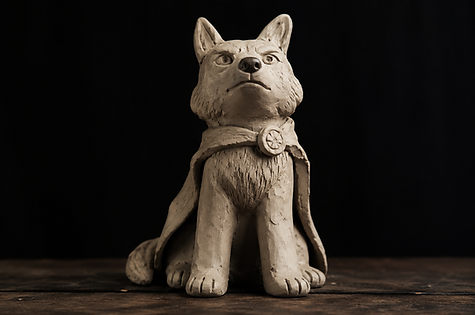
A workshop that creates space for children to explore strong emotions through their own Animal Hero.
The core mechanism of the program is this: by expressing inner experiences through their Animal Hero, the child can reflect on their emotions without having to confront them directly.
Foundation Session — The child creates their own Animal Hero. Through clay, drawing, or storytelling, this character takes form: its strength, fear, safe place, and boundaries are defined. This session establishes the relationship between the child and the hero.
Following Sessions — Themes are explored through the hero: anger, conflict, setting boundaries, friendship, and loss. The child expresses what they bring from their own life through the language of the hero. Over time, the hero deepens and becomes a character with its own story.
After the foundation session, your child may attend as many workshops as they wish — each session is complete in itself, while the hero’s story gradually becomes richer.
At this age, the aim is to support emotional regulation, social-emotional skills, and self-expression. Ages 7–10 are a period in which children begin to experience strong emotions such as anger, jealousy, and fear, while they are still developing the tools to cope with them.
The symbolic character gives the child the opportunity to look at their emotions from a distance rather than directly — and this distance makes reflection possible.